
Helping children develop good study habits takes time, patience and the right support.
Some children enjoy studying, while others may find it difficult to sit in one place, concentrate or complete their homework.
Parents play an important role in making learning a regular part of a child's daily routine. Simple changes at home can help children become more organised, focused and confident in their studies.
1. Create a Regular Study Routine
Children often find it easier to study when they follow a consistent daily schedule.
Set aside a particular time for homework, reading and revision. The routine does not have to be complicated. Even a short, regular study session can help children become familiar with managing their learning time.
A daily study timetable for students can also help them balance schoolwork, playtime and other activities.
2. Choose a Comfortable Study Space
The place where children study can affect their ability to concentrate.
Choose a quiet, well-lit area with a comfortable seating arrangement. Keep textbooks, notebooks, stationery and other learning materials within reach.
Try to keep away distractions such as television, mobile phones and unnecessary noise during study time. A dedicated space can help children understand when it is time to focus on their lessons.
3. Encourage Reading Every Day
Reading helps children improve vocabulary, language skills and understanding.
Parents can encourage children to read storybooks, short articles or age-appropriate educational material. Younger children may enjoy reading with their parents, while older students can gradually develop independent reading habits.
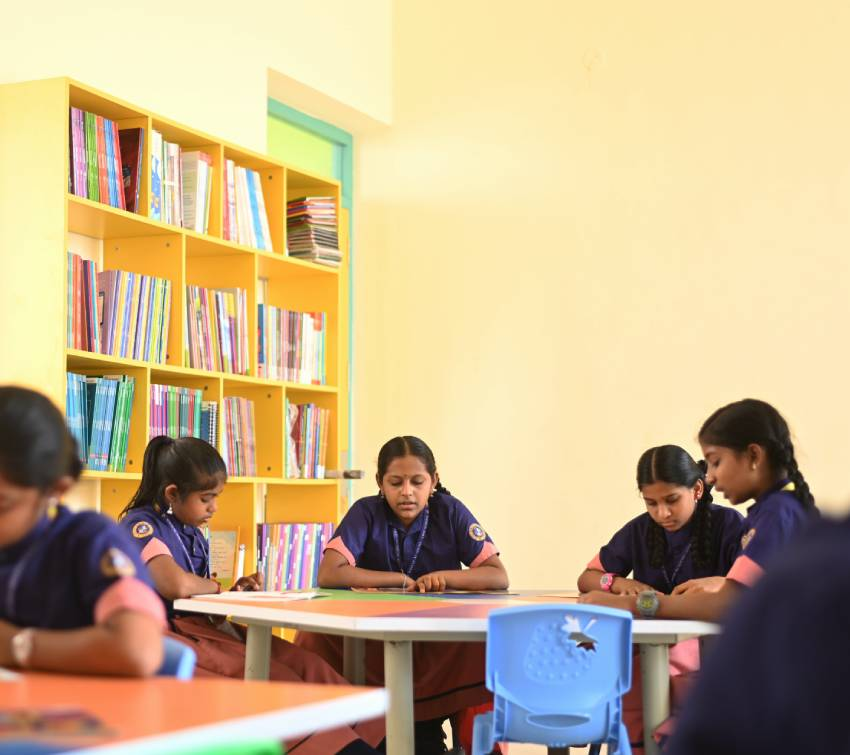
Spending even 15–20 minutes a day with a book can make reading a regular part of their routine. At Krisar Academy, our modern school library provides students with a wide range of books to build lasting reading habits.
4. Help Children Understand Instead of Memorising
Remembering information is useful, but understanding a concept is equally important.
Instead of asking children to memorise every answer, encourage them to explain what they have learned in their own words. Use simple examples from everyday life to make difficult topics easier to understand.
This approach can improve conceptual learning, encourage curiosity and help children apply their knowledge in different situations. Learn more about our inquiry-based academic approach.
5. Divide Large Tasks into Smaller Activities
Looking at several chapters or assignments at once can make studying feel difficult.
Help children divide their work into smaller tasks. For example, they can complete one lesson, take a short break and then move on to the next activity.
Following effective study techniques for students, such as making short notes, practising questions and revising lessons regularly, can make learning more manageable.
6. Allow Time for Breaks and Play
Studying for long hours without a break can make children tired and less interested in learning.
Include short breaks between study sessions. Outdoor games, physical activities and hobbies give children time to relax before returning to their lessons.
A healthy balance between study and play can help children maintain interest in their daily routine. Explore how our beyond academics programmes foster this balanced growth.
7. Appreciate Effort and Progress
Children may not understand every lesson immediately or get every answer right. Instead of focusing only on marks, appreciate their effort and improvement.
Encourage them to ask questions, learn from mistakes and try again when something feels difficult.
Positive feedback can help children develop confidence and a better attitude towards learning.
Frequently Asked Questions
How many hours should children study at home?
Study time depends on the child's age, class and schoolwork. Younger children generally benefit from shorter learning sessions, while older students may need more time for homework and revision.
How can parents improve a child's concentration while studying?
A quiet study space, regular breaks and a fixed study schedule can help. Parents can also reduce distractions and divide lessons into smaller tasks.
What are some effective study techniques for school students?
Reading regularly, preparing short notes, practising questions, revising lessons and explaining concepts in their own words are useful study methods.
How can schools support better learning habits?
Schools can encourage students through interactive lessons, regular practice, classroom discussions and guidance from teachers. Consistent communication between parents and teachers can also support a child's learning progress.
Final Thoughts
Good study habits are built gradually through regular practice and encouragement. Children do not need to follow a perfect routine from the beginning. With patience and support from parents and teachers, they can learn to manage their time, understand lessons and take greater responsibility for their studies.
If you are exploring the Best CBSE schools in Vellore, look at how the school encourages classroom participation, independent learning and regular academic progress. A supportive learning environment can help children develop habits that benefit them both inside and outside the classroom.