Key Takeaways
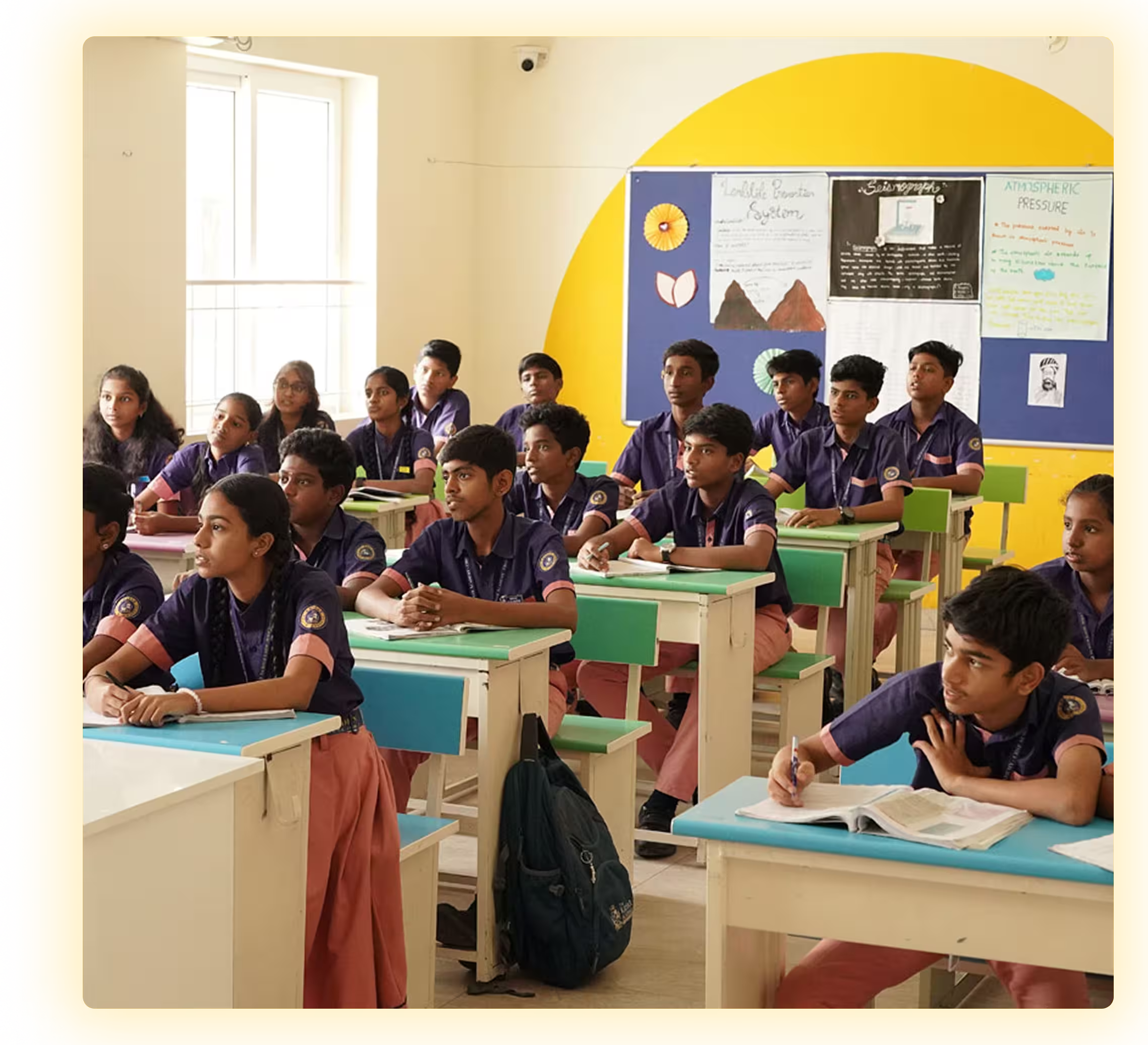
Every classroom at The Krisar Academy is a fully air-conditioned smart classroom equipped with modern teaching technology.
Smart classroom technology moves learning beyond writing notes and passive listening, into interactive, visual, and collaborative learning that suits diverse learning needs.
The AI and Robotics Laboratory extends digital smart classroom learning into hands-on application.
Smart classrooms at Krisar enable teachers to deliver lessons using multimedia presentations, interactive displays, and digital resources that traditional classrooms cannot match.
The result is a structured, engaging learning environment that prepares students with the essential skills and future ready skills demanded beyond school.
Introduction: Why Smart Classrooms Matter in 2026
Traditional teaching methods built around a teacher, a blackboard, and students writing notes have served education for generations. But they were not designed for the way students learn today, or for what students need to succeed tomorrow.
A smart classroom changes the relationship between teacher and student. It turns a passive experience into an active one. It allows teachers to teach effectively using visual learning tools, multimedia presentations, and interactive lessons that connect complex concepts to real understanding rather than rote memorization.
At The Krisar Academy, every classroom is a smart classroom. This is not a single showcase room reserved for demonstrations. It is the standard smart classroom setup across the school, available to every student from Pre-KG through Grade 12, every day.
What Is a Smart Classroom?
A smart classroom is a learning space equipped with advanced technology that enables teachers to deliver lessons in ways that go beyond what traditional classrooms allow.
Where a traditional classroom relies on written text and verbal explanation alone, a smart class setup integrates interactive displays, digital tools, and visual learning resources that make abstract or complex concepts easier to understand.
The core purpose of smart classroom technology is not novelty. It is to create an engaging learning environment where students learn more effectively, participate more actively, and develop the digital literacy they need for higher education and professional life.
At the standard smart classroom level, this includes:
How Smart Classrooms Work at The Krisar Academy
Interactive Lessons Instead of Passive Listening
Traditional classrooms depend heavily on a teacher speaking and students writing notes. Smart classroom technology shifts this.
Teachers at Krisar use interactive whiteboards and interactive displays to deliver lessons where students can see concepts demonstrated visually, engage with content in real time, and participate in ways that go beyond raising a hand. For subjects like physics, mathematics, and biology, visual learning through diagrams, animations, and interactive simulations makes complex concepts genuinely clearer than a static board explanation can achieve.
Students engaged in this way retain more, participate more, and develop critical thinking skills naturally through the process of active engagement rather than passive reception.
Multimedia Presentations That Serve Diverse Learning Needs
Not every student learns the same way. Some students absorb information through reading. Others understand better through visual demonstration. Others need to hear and see simultaneously.
Smart class technology enables teachers to address various learning styles within a single lesson. A topic can be introduced with a short visual explanation, reinforced with an interactive tool, and summarized with a digital resource that students can revisit. This approach serves diverse learning needs in a way that traditional teaching methods, built around a single delivery format, structurally cannot.
At Krisar, this means a student who struggles to grasp a concept through text alone has multiple ways to access the same understanding. That flexibility directly affects how students learn and how confident they become in the subject over time.
Collaborative Learning and Student Participation
Smart classroom tools create conditions for collaborative learning that traditional classrooms make difficult.
When content is displayed on an interactive display rather than a static board, the entire class works from the same visual reference point. Students can share ideas, respond to questions, and participate in group problem-solving within the lesson itself. Student participation increases because the format invites it.
This also builds the communication skills and confidence to share ideas that schools are expected to develop, not just the academic content of the curriculum.
Preparing Lessons with Digital Resources
Smart classroom technology benefits teachers as much as students.
Krisar's smart class setup enables teachers to plan and deliver lessons using digital resources that are more current, more visual, and more flexible than printed materials alone. Teachers can structure a lesson around a multimedia presentation, incorporate educational apps that reinforce a concept, and adjust delivery in real time based on how students are responding.
This makes teaching more effective and allows Krisar's faculty to teach effectively in ways that keep students engaged across subjects and grade levels.
The AI and Robotics Laboratory: Smart Learning Beyond the Classroom
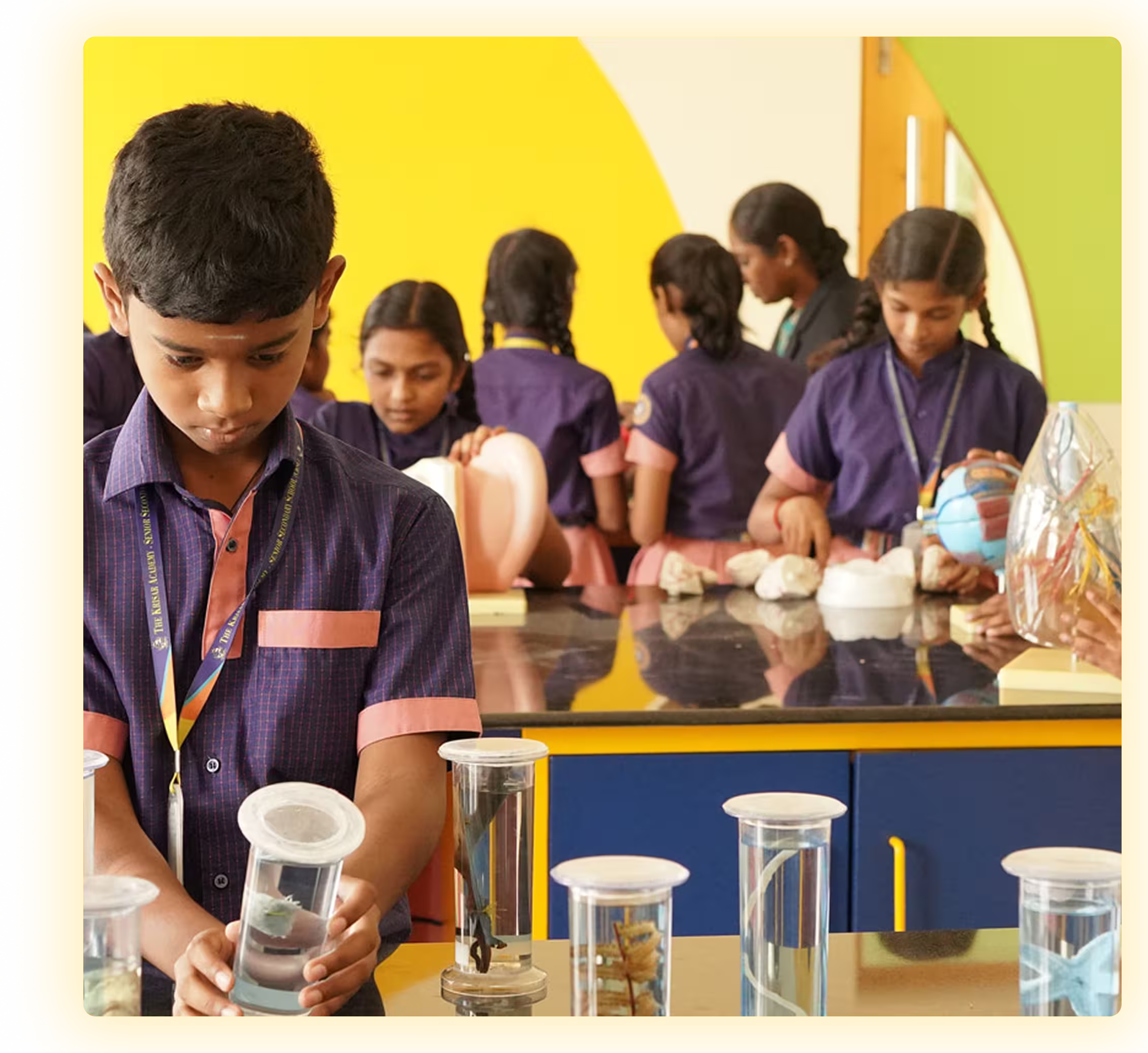
Hands-on learning in Krisar's AI and Robotics Laboratory
Smart classroom technology at Krisar extends beyond the classroom walls into the AI and Robotics Laboratory.
This is a facility that most private engineering colleges in Tamil Nadu did not have a decade ago. Krisar's students access it at school level.
The laboratory moves smart learning from digital classroom interaction into hands-on application. Students learn not just how technology works in theory but how to build with it, programme it, and apply critical thinking to real problems. This kind of learning develops the future ready skills and essential skills that universities and employers consistently report they cannot find in enough graduates.
For students with ambitions in engineering, technology, or competitive entrance examinations, the combination of a smart classroom learning environment and a functioning AI and Robotics Laboratory is a meaningful academic advantage that most schools in this region cannot offer.
Advanced Laboratories: Science Learning Beyond Writing Notes
The smart classroom approach at Krisar carries through into the advanced science and technology laboratories.
For students preparing for NEET and JEE, laboratory familiarity built during school years is a direct advantage. Understanding how to handle equipment, conduct experiments, and observe outcomes practically builds a deeper understanding of concepts that purely classroom-based learning leaves incomplete.
Krisar's advanced laboratories support the same principle that drives the smart class setup: students learn better when they engage directly with what they are studying rather than only reading or listening about it.
Smart Classrooms and the CBSE Curriculum
Krisar Academy's smart classroom technology is implemented within a CBSE-affiliated framework, which means the digital tools and interactive lessons are aligned to the curriculum that governs JEE, NEET, and board examinations.
This is an important distinction. Smart classroom solutions are only as useful as their curriculum alignment. Technology that is not tied to what students are actually assessed on creates an engaging learning environment without academic outcomes.
At Krisar, the smart class technology enables teachers to cover the CBSE curriculum more effectively, not to replace it with a separate learning experience. The result is that students benefit from a modern classrooms environment while remaining fully prepared for the examinations that determine their academic future.
How Smart Classrooms Prepare Students for What Comes Next
The advantages of smart classrooms go beyond what happens during school years.
Digital literacy is now a baseline expectation in higher education and in every professional field. Students who have spent years learning in a digital classroom environment, using interactive tools, engaging with multimedia content, and applying collaborative learning approaches, arrive at university already comfortable with the technology-driven methods that higher education uses.
The critical thinking developed through interactive learning, the confidence built through regular student participation, and the digital literacy acquired through consistent smart class exposure together constitute a set of essential skills that prepares students for their professional future in a way that traditional teaching methods alone cannot replicate.
Smart classrooms aim to create well rounded students who are academically prepared, technologically capable, and ready to operate in environments that bear no resemblance to a blackboard-and-chalk classroom.
Smart Classroom vs Traditional Classroom: The Practical Difference
| Traditional Classrooms | Smart Classroom at Krisar | |
|---|---|---|
| Primary delivery | Teacher speaking, writing notes | Interactive displays, multimedia presentations |
| Learning styles served | Primarily auditory and text-based | Visual, auditory, interactive, collaborative |
| Student participation | Question and answer, limited | Active engagement through interactive tools |
| Complex concepts | Diagrams on board | Animated, visual, interactive simulations |
| Digital literacy development | Minimal | Embedded in daily classroom experience |
| Teacher tools | Textbook, chalk, static board | Digital resources, educational apps, smart boards |
The difference is not that traditional classrooms are without value. It is that smart classroom technology allows teachers to do more, cover concepts more clearly, reach more learning styles, and keep students engaged across a full school day.
Experience The Krisar Academy's Smart Classrooms
The difference between a standard classroom and a smart classroom becomes clear when you see it in operation.
Every student at The Krisar Academy learns in a fully equipped smart class environment, supported by advanced laboratories and an AI and Robotics Laboratory that extends digital learning into practical application.
Contact The Krisar Academy to arrange a campus visit and see the smart classroom setup in person.
Contact Our Experts+91 75400 88387
info.thekrisaracademy@gmail.com
#136/6, Arcot to Arani Main Road, Ranipet District, TN 632512
Frequently Asked Questions
1. What smart classroom technology does The Krisar Academy use?
Every classroom at Krisar is equipped with smart class technology including interactive displays, interactive whiteboards, and multimedia presentation tools. The AI and Robotics Laboratory extends this into hands-on digital learning beyond standard classroom technology. All classrooms are fully air-conditioned.
2. How do smart classrooms benefit students with different learning styles?
Smart class solutions allow teachers to deliver the same concept through multiple formats within a single lesson: visual demonstration, interactive tools, audio-visual content, and collaborative exercises. This addresses various learning styles in a way that traditional teaching methods built around a single delivery format cannot. Students who struggle with text-based learning gain access to visual and interactive routes to the same understanding.
3. Are smart classrooms available to all students at Krisar or only certain grades?
All classrooms at The Krisar Academy are smart classrooms. The smart class setup is the standard across every grade from Pre-KG through Grade 12, not a facility reserved for senior grades or select subjects.
4. How does the AI and Robotics Laboratory connect to smart classroom learning?
The AI and Robotics Laboratory extends the digital smart classroom experience into practical application. Where the smart class enables interactive lessons and visual learning within the curriculum, the laboratory gives students hands-on experience building, programming, and applying technology. Together they create a learning environment that develops both conceptual understanding and applied skills.
5. Do smart classrooms help with NEET and JEE preparation?
Yes. Krisar's smart classroom technology is aligned to the CBSE curriculum, which directly maps to JEE and NEET syllabi. Interactive lessons and visual learning tools make complex concepts in physics, chemistry, mathematics, and biology clearer and easier to retain. Combined with Krisar's integrated NEET and JEE coaching programme, the smart classroom environment supports competitive exam preparation from the foundation level upward.
6. How do smart classrooms develop skills beyond academics?
Regular engagement with smart classroom tools builds digital literacy, critical thinking through interactive problem-solving, communication skills through collaborative learning, and the confidence to share ideas and participate actively. These are the essential skills and future ready skills that universities and employers expect, developed naturally through daily classroom experience rather than as a separate programme.
The Krisar Academy | CBSE Affiliated | Est. 2018 | Pre-KG to Grade 12